Empowerment of Indigenous Women in Africa and Asia
Implementation Period: 2021
Implementing Organization: African Indigenous Women Organisation – Central African Network (AIWO-CAN)
Key Partners: Comic Relief, IWGIA (Denmark), PAICODEO (Tanzania), Samburu Women Trust (Kenya)
Geographical Scope: Africa and Asia
This project aimed to strengthen the empowerment of Indigenous women in Africa and Asia through institutional capacity building, strategic planning, regional coordination, and advocacy, particularly in the context of increased vulnerabilities caused by the COVID-19 pandemic.
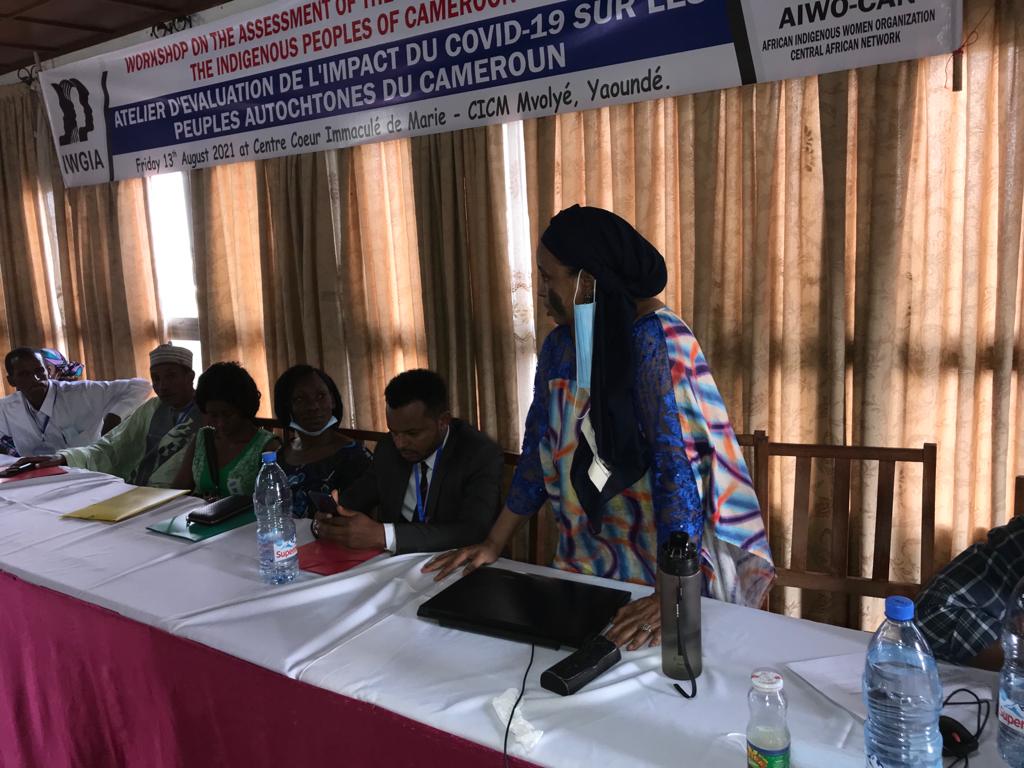
A major component of the project was the strengthening of AIWO-CAN’s institutional capacity through the development of its Strategic Plan for 2021–2026. A validation workshop was held from 13 to 14 August 2021 at the CICM Mvolyé Conference Centre, bringing together AIWO-CAN members, Indigenous partner organizations, and technical partners. The strategic plan was reviewed, amended, and validated through a participatory process and structured around five key axes: empowerment of women; rights to land and natural resources; climate change and biodiversity; access to basic social services; and institutional strengthening of AIWO-CAN.
The project also supported regional coordination and experience-sharing through a regional evaluation meeting of partners implementing the project “Empowering Indigenous Women in Africa and Asia.” Partners from Tanzania, Kenya, Cameroon, and Denmark assessed progress, shared lessons learned, and identified challenges. Despite constraints linked to COVID-19, partners reported positive results, including strengthened women’s economic empowerment initiatives, improved participation of Indigenous women in decision-making, and increased documentation of gender-based violence.
Key findings highlighted a significant rise in sexual and gender-based violence during lockdowns, particularly affecting Indigenous women, girls, and persons with disabilities. Economic hardship, limited access to justice, and weak health and protection services exacerbated vulnerabilities.
An advocacy strategy was developed to translate project findings into concise policy messages for presentation at international human rights forums, including the African Commission on Human and Peoples’ Rights and the UN Permanent Forum on Indigenous Issues. The project concluded that economic empowerment, education of women and girls, and sustained advocacy are critical pathways to advancing Indigenous women’s rights and resilience in Africa and Asia.